A road agency writes a specification, a supplier answers it, and both sides believe they agreed. Then the first message arrives with three lines where four were expected, or a controller that cannot read the string the traffic management centre sends. Most of these gaps trace back to one loose term. Procurement documents use variable message sign, changeable message sign, portable changeable message sign and variable message format almost interchangeably, and each one means something different depending on who reads it.
In traffic signage, the variable message format is the rule set that governs two things at once: how a message is arranged on the sign face, and how it is encoded for the controller that drives the display. The first half is a regulatory question answered by the Manual on Uniform Traffic Control Devices. The second half is a communications question answered by NTCIP 1203 and its MULTI markup language. Neither is a product, and neither is a certificate you can hang on a wall.
The two halves explain most of the confusion in a tender, so take them in order.
Two meanings of the same acronym
The acronym is shared with a military messaging standard, and that collision sends a share of search traffic down the wrong path. In defence procurement, VMF stands for Variable Message Format, a tactical data link protocol documented in MIL-STD-6017. In road signage, the same three words describe the layout and encoding of a driver-facing message.
The military version defines how units exchange command data over constrained battlefield networks, and has nothing to do with a trailer on a shoulder. Context separates the two: a specification about character heights, phases and legibility distances is a signage document, while one about tactical data links is a defence document.
How a changeable message sign formats one message
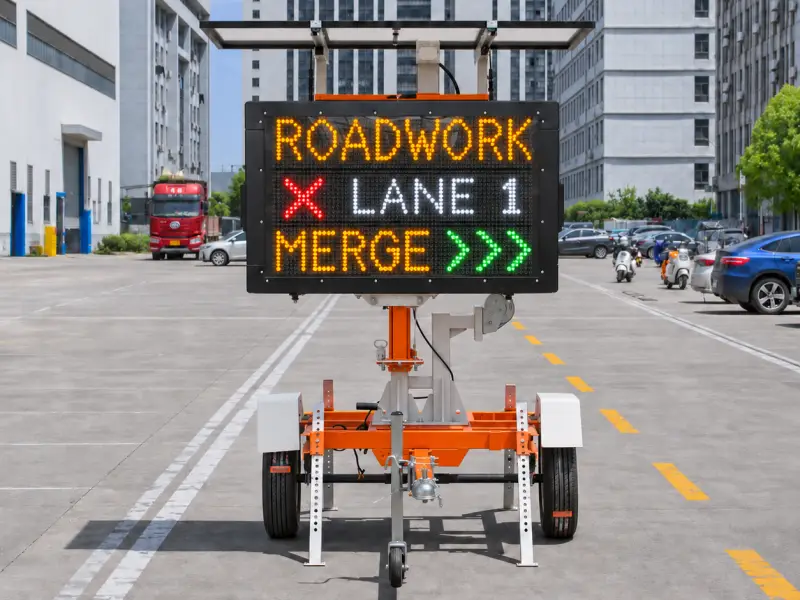
A changeable message sign formats a message under a hard ceiling: no more than two phases, no more than three lines per phase, and a phase a driver can understand without reading the other one. Everything else, from line centring to display timing, follows from that ceiling.
Section 2L.05 of the MUTCD is unusually specific for a design document, and worth knowing because a sign that breaks it fails at inspection rather than at delivery.
- Each message has a maximum of two phases, each phase a maximum of three lines, and text is centred within each line.
- A phase stays up for at least two seconds, and the whole two-phase cycle runs no longer than eight seconds.
- A single phase carries no more than three units of information. A whole message carries no more than four where traffic runs at 35 mph or above.
- A unit of information, meaning one answer to one question a driver can act on, stays at four words or fewer.
- Fading, rapid flashing, dissolving, scrolling and travelling text are all prohibited.
A message like MAJOR CRASH / AT EXIT 121 / USE ROUTE 46 is three lines and three units, and a driver can act on it. A message naming a contractor, a project phase and a website is four units crammed into three lines, and it fails.
Character height is the other half of the format, and the number most often argued over in a factory acceptance test. The FHWA Portable Changeable Message Sign Handbook ties height to the distance at which a driver can read the text, which in turn sets the approach speed a sign can serve.
| Character height | Legibility distance | Approach speed |
|---|---|---|
| 18 in | 720 ft | 40 mph |
| 24 in | 960 ft | 50 mph |
| 54 in | 2,160 ft | Any |
Eighteen inches is the floor for a trailer-mounted unit, and the message has to be legible from half a mile in day and night conditions. Incident response vehicles get a documented exception down to 10 in. Anything below 18 in on a fixed trailer is a specification error, not a saving.
Matrix types and why they change the rules
The matrix decides how much of the format you can use.
- Modular. Discrete character blocks, typically three lines of eight. Cheap, robust, locked to one character size.
- Continuous line matrix. Each line is one strip, which allows proportional fonts and a more natural reading rhythm.
- Full matrix. The whole face is addressable pixels. Character height becomes a variable and arrows become possible.
Whatever the type, each character is built on a grid at least five pixels wide by seven high. Most units hold eight characters per line no matter how tall the characters are, which is why the three-line portable changeable message sign format has stayed durable in work zones. The constraint is built into the panel.
What VMF means inside the controller
On the controller side, the variable message format is a markup string. NTCIP 1203 stores each message in the Mark-Up Language for Transportation Information, known as MULTI, and every compliant sign on a network renders the same string the same way.
MULTI is plain ASCII with instructions held in square brackets. A new line is [nl], a new page is [np], and a page timing tag sets how long that page dwells. Because the syntax is standardised, a traffic management centre can push one message to units from different manufacturers and expect the same result on each.
The object holding the string is dmsMessageMultiString. When an integrator asks whether a sign will drop into an existing control room, this object and the supporting status objects decide the answer. A unit that speaks only a vendor protocol forces a custom driver, and that is a permanent maintenance liability. NTCIP 1203 covers communication and control; EN 12966 covers optical performance, meaning luminance, contrast and viewing angle. A unit that satisfies one and not the other is either unreadable in daylight or unreachable from the control room.
What a message generator actually does
A message generator, sometimes sold as a sign editor, is offline layout software. You build the message on a pixel-accurate preview, check it against the phase budget, and export it as a MULTI string. The preview is the point. An operator drafting MAJOR CRASH AT EXIT 121 sees on screen that the middle line will not fit eight characters, and shortens it before the message reaches the road. Generators that show a clean text box instead of the pixel grid are why drivers see truncated words at highway speed.
Getting abbreviations past the reviewer
Abbreviations are allowed. Invented abbreviations are not. Every abbreviation on a changeable message sign has to come from the approved list in the local manual or the agency’s message policy, because a driver decoding an unfamiliar shortening is a driver not watching the lane.
| Word or phrase | Abbreviation | Word or phrase | Abbreviation |
|---|---|---|---|
| Construction ahead | CONST AHD | Lane closed | LN CLOSED |
| Detour route | DETOUR RTE | Left lane | LFT LN |
| Miles per hour | MPH | Crossing | |
| Hazardous material | HAZMAT | Maintenance | MAINT |
| Shoulder | SHLDR | Temporary | TEMP |
| Westbound | W | Eastbound | E |
Do not abbreviate a word that is not on the list, and do not animate anything. A flashing phase reads as an emergency signal, and a scrolling phase hands the driver a moving target to track while the lane ahead needs attention.
From format to hardware
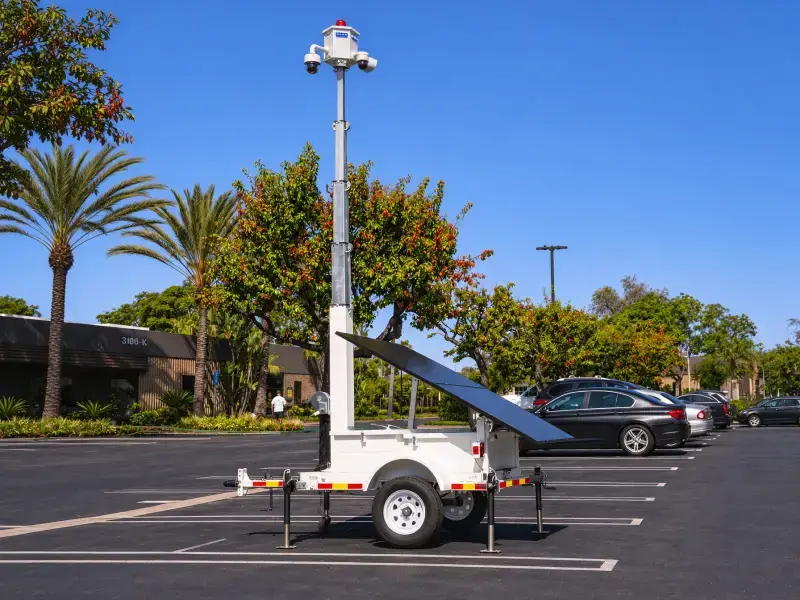
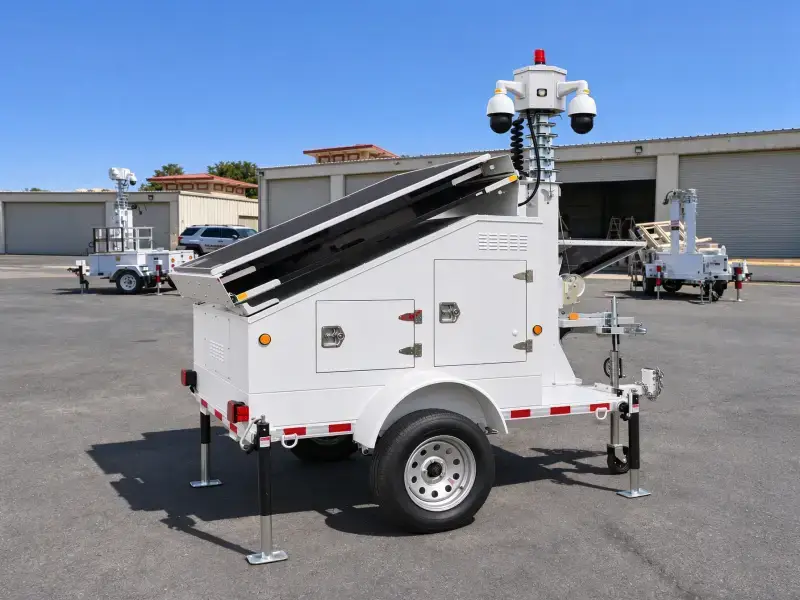
Once the format is fixed, the hardware question is mostly about mounting. The same three-line message can sit on a trailer, hang off a truck bed or ride above a service vehicle, and each mounting changes the character height, the power budget and the approval path.
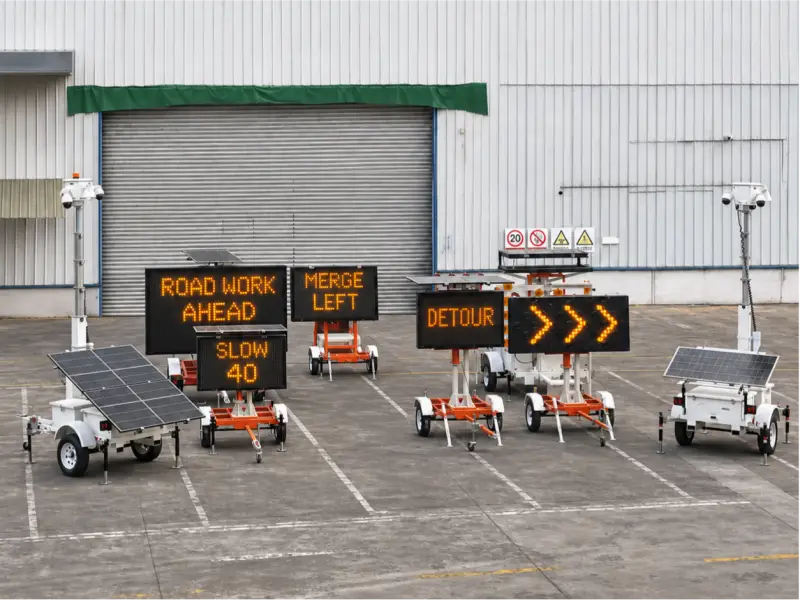
Three families cover most of the market. A three-line text unit handles routine closures and detours at the lowest cost per unit. An amber full-matrix panel adds arrows, lane-status icons and variable character heights while staying monochrome and cheap to run. A full-colour matrix carries route shields, colour-coded warnings and simple graphics. Above that, variable message signs split again by mounting: trailer, vehicle roof or truck chassis, each with its own mast and lift.
Placement follows the format too. A stationary trailer panel sits at least 7 ft above the roadway at its lowest edge, with the face turned roughly 3 degrees toward the lane so headlights do not wash it out.
Where the format changes
The message rules were written for freeway work zones, and most failures happen when a buyer applies them unchanged to an airport, a speed display or a short hire. Each of those settings changes one variable in the format, not the whole rule set.
At an airport
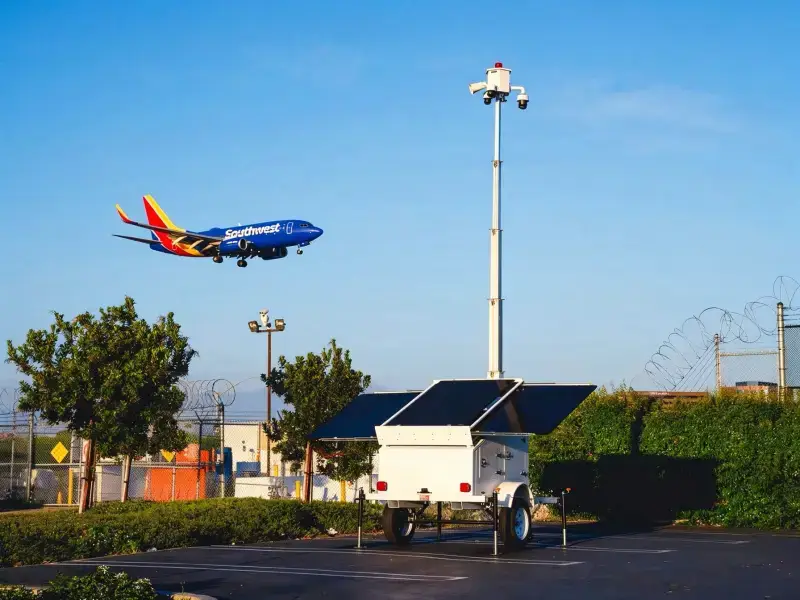
The airport case is about decision points rather than lane discipline. A sign on the approach road reports which lots still have space. A curbside unit separates drop-off from pick-up and states the time limit. A unit at the cellphone lot carries arrival status so drivers stop circling the terminal.
The format constraint is the data feed. Parking counts and flight status change every few minutes, so the controller has to accept updates from a parking system or flight information feed instead of a stored message list. Brightness control matters more here than on a highway, because one panel may sit under direct sun at noon and beside terminal lighting at midnight. A solar-powered mobile changeable message sign suits overflow lots and temporary kerbside changes where trenching for power is not an option.
When the sign shows a speed limit
A speed limit display is a different regulatory animal from a warning message. The first variant is a variable speed limit sign, where the posted limit changes with conditions and the number carries the same legal weight as a painted one. The second is a radar speed feedback sign, which shows the approaching driver’s measured speed beside the limit and is advisory.
Both constrain the format the same way. The numeral has to sit at the height and stroke width the manual specifies for regulatory legends, not at whatever the panel defaults to. A two-digit limit at 18 in reads very differently from the same limit squeezed into a graphic field, and agencies do reject the second.
Renting instead of buying
Rental fits a message requirement with an end date: a three-week closure, a one-off event, a seasonal lot. Hire is priced by duration, usually per day, per week and per month, with separate charges for delivery, each movement between sites, message changes made by the supplier, and an optional damage waiver. Ask whether message changes are remote or need a visit, because a per-visit charge compounds on a long job.
Buying wins once the same fleet is needed across several sites or several years, and ownership brings control of the message library.
What variable message signs cost
Purchase price tracks display area, pixel pitch and power system far more than the name on the trailer. Published work zone cost guidance puts small truck-mounted units near US$10,000, mid-size trailer units at US$12,000 to US$14,000, and full-size trailer units from US$14,000 upward.
| Band | Typical size | Mounting | What drives the price |
|---|---|---|---|
| Entry | 2.5 ft by 5 ft | Truck-mounted | Small panel, single colour, often solar |
| Mid | 8 ft by 5 ft | Trailer | Wireless control, three lines at full character height |
| Full size | 10 ft by 6 ft | Trailer | Largest matrix, five-colour or full-colour, heavier chassis |
Four items move a quote more than anything else. Display area sets the number of LED modules, and a finer pixel pitch across a large face is where budgets go. The power system decides whether a unit rides out a week of overcast weather without a service call. The controller decides whether the unit can join a network at all, and one that cannot hold a MULTI string costs more in integration than it saved.
FAQ
Who approves the messages shown on a public road?
The responsible agency does, and most delegate that approval to an engineer or inspector on the project. A supplier should never load an unapproved message, including a test message left up after commissioning.
Will a solar unit last through a week of overcast weather?
It depends on battery reserve and duty cycle, not on the panel rating alone. A unit holding one steady message at moderate brightness draws far less than one cycling two phases at full output through a long winter night. Ask for the autonomy figure in hours at a stated brightness.
Can a sign display non-Latin characters?
Often yes, but it is a firmware question rather than a panel question. The practical limit is the font file loaded into the controller. A buyer who needs Arabic, Cyrillic or Chinese legends should ask for a sample rendering on the actual controller before signing, because the pixel grid leaves little room for complex strokes.