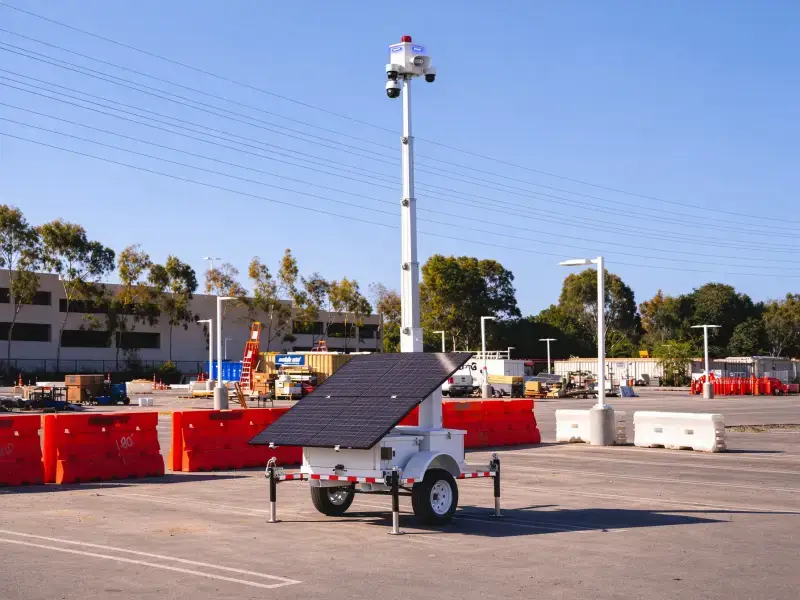
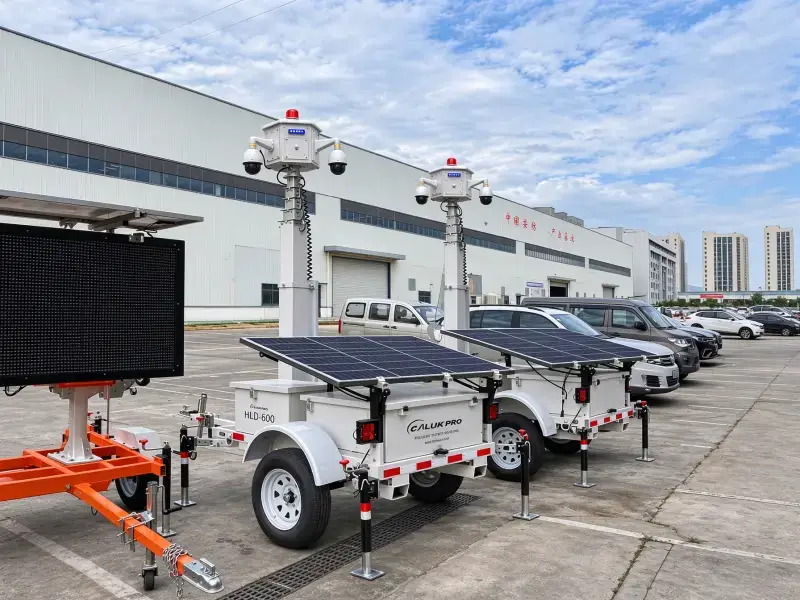
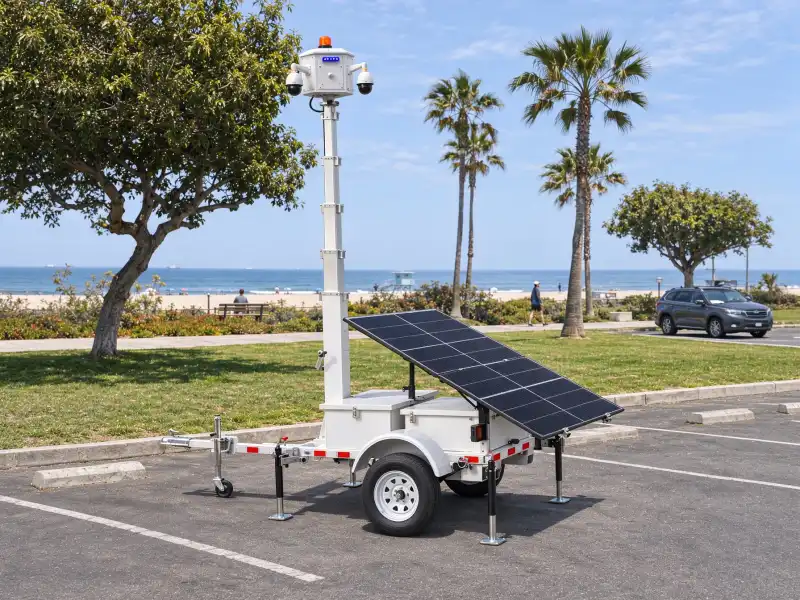
Most traffic control failures on a work zone aren’t caused by the barrier or the cones. They come from the message board that nobody read because the text was too small, the phase was too fast, or the trailer sat in the wrong place. Contractors and agency staff keep asking the same set of questions about these units, and the answers are spread across a federal standard, a stack of state handbooks, and supplier quotes that never quite line up.
A portable changeable message sign is a trailer-mounted or vehicle-mounted electronic display that shows short text messages to road users, and in the United States it must meet the MUTCD limits on character height, line count, message phases, display timing, brightness control, mounting height and battery backup. The device is a supplement to static signs and pavement markings, never a replacement, and it may only carry traffic operational, regulatory, warning or guidance information. Everything else, from panel type to power configuration, follows from those constraints.
The sections below work through the standard first, then the parts of the specification that decide what you actually pay and what you actually get on site.

What the term covers
VMS, CMS, PCMS and message board all describe the same family of device, and the differences between the terms are mostly about mounting and about which standard or contract the buyer is working to. A variable message sign is the broad category. A changeable message sign is the same thing under a different naming habit. Portable changeable message signs are the subset that can be towed or driven to a location and set up without fixed foundations.
VMS, CMS and PCMS name the same device
The naming splits three ways in practice. Agencies writing to the MUTCD tend to say portable changeable message sign, and the abbreviation PCMS follows from that. Suppliers and rental yards say VMS because buyers search for it. Marketing material often says message board, especially for the trailer product itself.
The form factor matters more than the label. Portable units break down into three groups:
- Trailer-mounted signs, the default for roadworks and long-duration closures
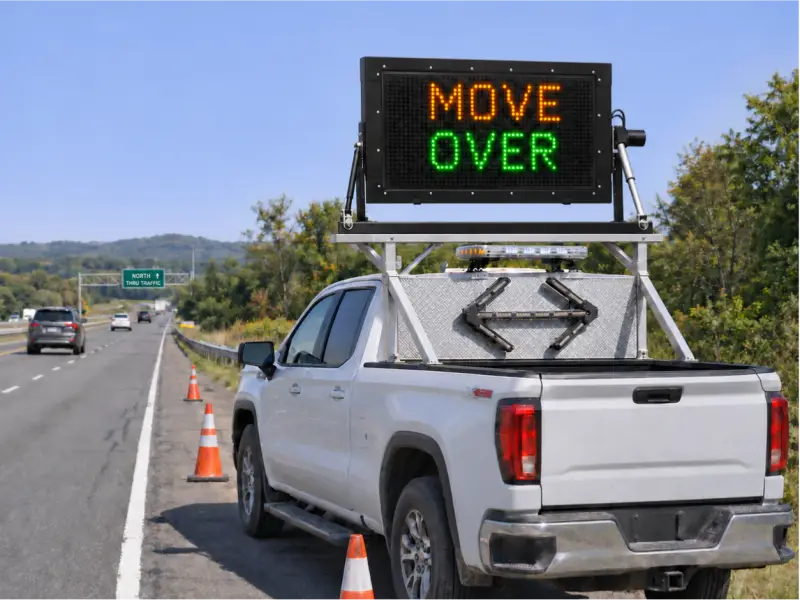
- Vehicle-mounted signs, mounted on a truck bed or service patrol vehicle for incident response
- Compact vehicle-mounted signs, sized for utility crews, parking operations and short-duration work
A buyer comparing variable message signs across suppliers should check which of these three the quote actually describes, because character height, power budget and mounting hardware differ across all of them.
What the MUTCD requires a portable changeable message sign to do
The MUTCD sets a floor, not a target: messages should use a minimum 18 inch letter height, fit three lines of eight characters or a full matrix display, run no more than two phases at two to eight seconds total, stay visible from half a mile day and night, adjust brightness automatically, and keep running on battery backup if the primary power fails. These numbers come from Part 6 of the MUTCD, which governs temporary traffic control.
| Requirement | Value in the standard | Why it matters in a quote |
|---|---|---|
| Minimum letter height | 18 in | Drives panel size, trailer length and price |
| Reduced letter height | 10 in on service patrol and incident response vehicles, if legible from 650 ft | Applies only to vehicle-mounted incident units |
| Line count | Three lines of eight characters, or full matrix | Contract language often names the 3 x 8 format outright |
| Visibility | 0.5 mile, day and night | Sets the minimum LED output and contrast target |
| Message phases | Maximum two, three lines per phase | Limits how much information one sign can carry |
| Display timing | At least 2 seconds per phase, 8 seconds maximum for both | Rules out long scrolling text |
| Dynamic effects | Animation, flashing, dissolving, scrolling and travelling text prohibited | Some agencies read this as covering novelty graphics too |
| Brightness | Automatic adjustment to ambient light | A manual-only dimmer may fail inspection |
| Memory and control | Onboard review screen, message memory retained without power | Affects controller specification |
| Backup power | Battery backup for primary power failure | Sits behind the solar and battery sizing decision |
| Mounting height | Sign bottom at least 7 ft above the roadway in urban areas, 5 ft in rural areas | Trailer mast height, not display size |
Message phases and display timing
Two phases is a hard ceiling for good reason. Drivers reading a three-line sign at highway speed get roughly one pass at each phase, and research on legibility has long shown that messages needing three or more passes simply don’t land. When a message won’t fit in two phases, the standard answer is a second sign, not a faster cycle.
Placement for multiple units is specified too. Signs should sit on the same side of the roadway, separated by at least 1,000 ft on freeways and expressways and at least 500 ft on other highways. Only one of them should run a sequential message at any moment.
A point that comes up often: can the board display a speed limit? A changeable message sign may show a speed limit where that limit is legally established for the location and the conditions, which is how variable speed limit systems work. Showing a number that looks like a limit without that legal basis is not compliant. A radar speed feedback display, which shows approaching drivers their own measured speed, is a different device category governed by separate provisions, even though the panel looks similar.
What a state PCMS handbook adds beyond the federal standard
Federal rules set minimums, and the state handbook turns them into an approved message library, a house style and an inspection routine. Two units that both meet the MUTCD can still fail a state review if the wording, abbreviation or placement doesn’t match local practice. Most state handbooks follow a common shape: message design principles, a library of pre-approved messages, an abbreviation list, siting guidance, and operating rules for who may change a message and when.
Read the state document before you specify hardware. It sometimes narrows the federal envelope, for example by requiring a specific minimum legend height above the 18 inch floor, a defined operating temperature range, or a set number of pre-programmed messages loaded at delivery.
Three thoughts on three lines
Message design in most handbooks reduces to one rule: three thoughts, one per line.
- The problem or situation ahead
- The location or distance to it
- The action the driver should take
“ROAD WORK / 2 MILES / MERGE LEFT” satisfies all three. “CAUTION / CONSTRUCTION ZONE / PLEASE DRIVE CAREFULLY” fails on all three, because it names no location, gives no action, and spends a line on courtesy text. Handbooks also warn against messages that are technically legal but functionally vague, and against splitting a single thought across two lines to fit more words in.
Approved message board abbreviations
Abbreviations on message boards follow the standard abbreviation tables in the MUTCD, with the state handbook usually supplying the short list that applies locally. A workable starter set:
| Full word | Accepted short form |
|---|---|
| Lane | LN |
| Road | RD |
| Street | ST |
| Avenue | AVE |
| Boulevard | BLVD |
| Feet | FT |
| Miles | MI |
| Hours | HR |
| Construction | CONST |
| Maintenance | MAINT |
| Detour | DET |
| Closed | CLSD |
| Center | CTR |
| North, South, East, West | N, S, E, W |
Three rules sit above the table. Never abbreviate the action word, because the action is the whole point of the message. Don’t invent a short form that isn’t on the approved list, however obvious it looks. And keep the panel in capitals, since uppercase-only fonts tolerate the coarser character matrices that portable signs use. Three-line units are built around that format, which is why three-line portable changeable message signs remain the workhorse configuration in North American contracts.
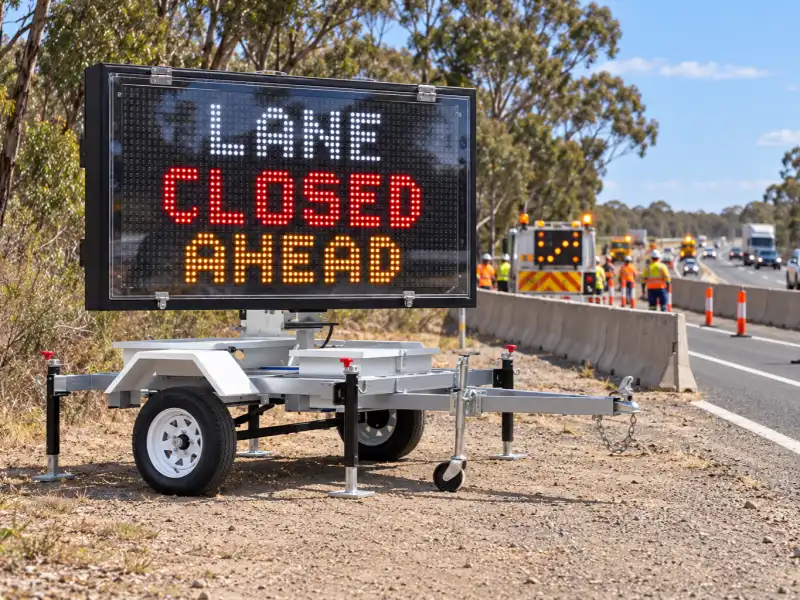
Display choices: full-matrix, three-line and colour
Full-matrix panels give you pixel-level control over character shape, graphics and colour, while three-line character-matrix panels give you fixed 3 x 8 text at a lower price per square foot. Most work zone contracts are written around text, which is why the fixed format still wins on value.
| Panel type | What it displays | Typical fit | Cost position |
|---|---|---|---|
| Amber three-line character matrix | Text only, 3 lines x 8 characters | Standard work zone messaging, contract-specified builds | Lowest |
| Amber full matrix | Text plus simple graphics and arrows | Variable geometry, arrow board simulation | Mid |
| Five-colour full matrix | Text in several legend colours, basic symbols | Lane control, wayfinding, event traffic | Mid to high |
| Full colour LED | Images, logos, animated content | Events, exhibitions, commercial hire fleets | Highest |
Two specifications decide legibility more than colour does: pixel pitch and character matrix size. Denser pitch reads better at distance but costs more. A 5 x 7 matrix is acceptable for uppercase-only text, while lowercase letters with ascenders and descenders need closer to 7 x 9. If a supplier quotes a full matrix panel, ask for the pixel pitch and the character matrix, not just the panel dimensions.
The site of the display also decides which mounting you need. Long-duration work zones suit trailer-mounted variable message signs, while escort vehicles and short jobs are better served by a vehicle-mounted unit that deploys in minutes.
What variable message signs cost
Price is set by six things: display area, pixel density, solar and battery capacity, trailer or vehicle mounting hardware, controller and remote communication, and whatever compliance testing the destination market requires. Two quotes for the same panel size can diverge widely because the cheaper one carries a smaller battery bank, a manual dimmer or no telemetry. There is no standard price for a portable changeable message sign, and any supplier who offers one without asking about panel size, autonomy requirement and mounting has skipped the specification.
The drivers, in rough order of impact:
- Display area and pixel density, which set the LED count and the structural frame
- Solar panel wattage and battery amp-hour capacity, which set how many sunless days the unit survives
- Trailer chassis, mast, levelling and brake requirements, which vary by road legality in the destination country
- Controller, review screen, message memory and remote update capability
- Environmental rating, including the operating temperature range the buyer’s climate demands
- Certification and test documentation for the market the unit will work in
Renting before buying
Rental is the right first move when the need is seasonal, when a contract runs for six weeks, or when a buyer hasn’t settled on a panel type. Published dry-hire rate tables from Australian equipment marketplaces, checked in November 2026, put trailer-mounted message boards at roughly AUD 120 to 180 a day, AUD 550 to 830 a week and AUD 1,650 to 2,420 a month, with solar units landing slightly above that band. Delivery, message changes and damage waivers are usually charged separately, and those figures are market estimates rather than quotes.
A fleet buyer should compare three numbers, not one: the monthly dry-hire rate, the utilisation the equipment will actually see, and the resale value of an owned unit. Hire wins on short jobs and unfamiliar configurations. Ownership wins when a unit works most weeks of the year and the specification is settled.
Power options: solar, battery and the generator question
Most portable units no longer need a generator: a solar array plus a battery bank carries a trailer through normal duty cycles, and the standard still requires battery backup regardless. Generators stay relevant in three situations, which are high-latitude winters with short daylight, very large full-colour displays with heavy duty cycles, and semi-permanent positions where the unit runs long hours year round.
Sizing is where projects go wrong. The panel wattage and the battery amp-hour rating have to be matched to the display load and to the worst realistic stretch of overcast weather, not to a sunny average. Configurations in the market commonly pair a single 150 W panel with a 120 Ah battery, stepping up to two or three panels as display area grows. Ask a supplier for the autonomy figure at a stated daily duty cycle and a stated latitude, and treat any answer without those two inputs as marketing.
Generators carry costs beyond fuel: noise complaints on residential frontage, refuelling logistics on remote sites, emissions and permit conditions on some projects, and a maintenance schedule that nobody owns. Where a site has grid power and a long duration, mains supply with battery backup is usually simpler than either option.
Where portable units get deployed
The common thread across deployments is that the information changes faster than a static sign can be reprinted, or the location moves. Work zones, incident response, airport access roads, events and remote industrial sites all share that property.
Work zones remain the largest use. Advance notice of lane closures, queue warnings and diversion instructions all change daily, and the unit moves with the work.
Incident response is the second. A vehicle-mounted board on a service patrol truck warns approaching traffic within minutes of a crash, which is when the risk of a secondary collision peaks. Reduced letter heights are permitted on these units specifically because they operate at close range.
Airports use boards on approach roads and rental car return lanes, where the message changes by flight bank, by lane allocation or by parking availability. The requirement is the same as on a highway: short, readable text at the distance drivers actually encounter it. A solar-powered mobile changeable message sign suits these positions because there’s rarely a convenient power drop on an airport perimeter road.
Events, park-and-ride operations and remote energy or mining sites round out the list. On a mine haul road or a well pad, the board often does double duty as safety messaging and as directional guidance for contractors who have never been on site.
A specification checklist before you order
Write the specification before you ask for prices, and hold every quote against the same list. A unit that misses one line here will miss it for its whole service life.
- Compliance: MUTCD part and section cited, plus the destination market’s own approval route
- Letter height and line configuration, stated in inches and in characters per line
- Panel type, pixel pitch and character matrix
- Brightness control: automatic, with the dimming range stated
- Phase logic: maximum two phases, timing adjustable within the 2 to 8 second window
- Power: panel wattage, battery capacity, autonomy figure with the duty cycle and latitude it assumes
- Mounting: trailer or vehicle, mast height, sign bottom height in operating mode
- Operating temperature range and weather sealing
- Controller: review screen, message memory without power, remote update method
- Delivery documents: test report, wiring diagram, message library, spare parts list
Frequently asked questions
Can a portable changeable message sign replace static signs in a work zone?
No. The standard treats these units as a supplement to conventional signs and pavement markings. They add timely detail, such as queue length or a diversion route, but the regulatory and warning signage that establishes the work zone still has to be there.
How long will a solar unit run through bad weather?
That depends on the battery bank, the display load and the local climate, and no single number covers all three. Ask for an autonomy figure stated against a specific daily duty cycle and a specific latitude, then check it against the worst run of overcast days the site sees in winter.
Can I hire a unit for a single weekend?
Yes, in most markets, though the economics favour longer terms. Daily and weekly dry-hire rates exist, but delivery, collection and message setup are often charged separately, so a one-day hire can cost proportionally more than a month.