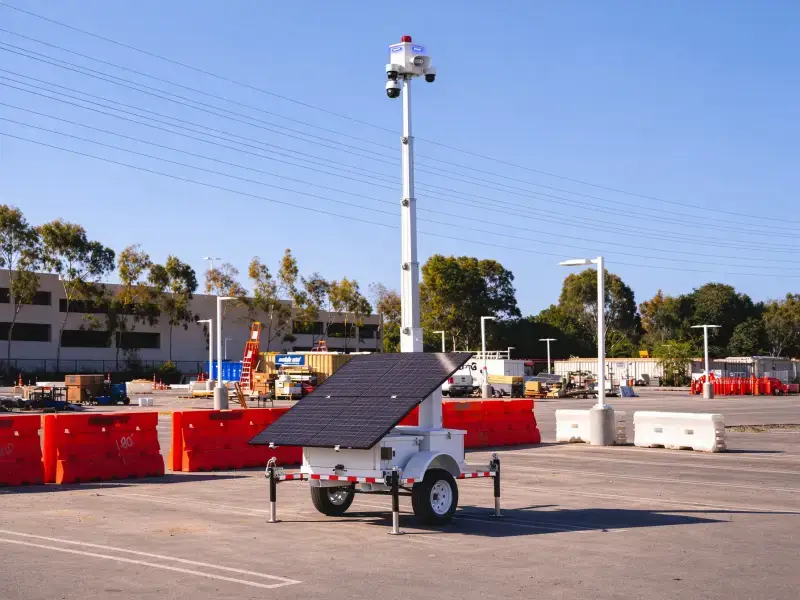
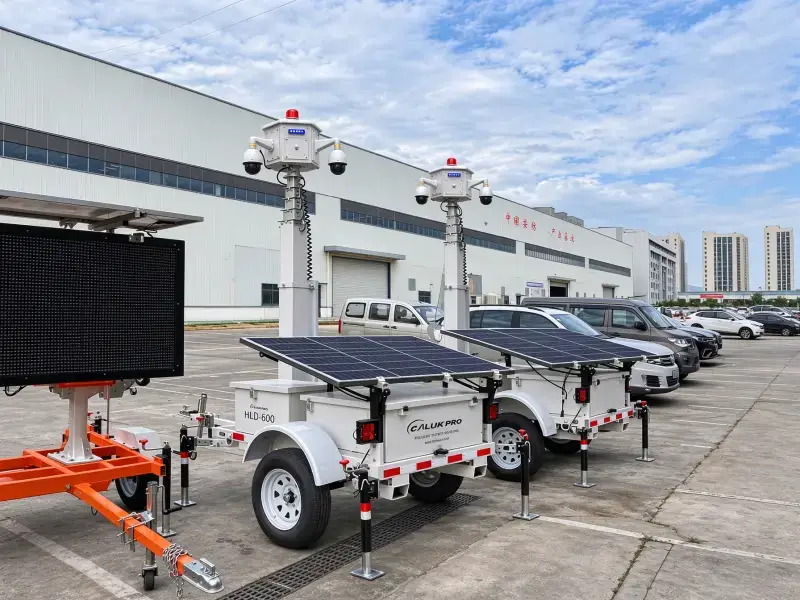
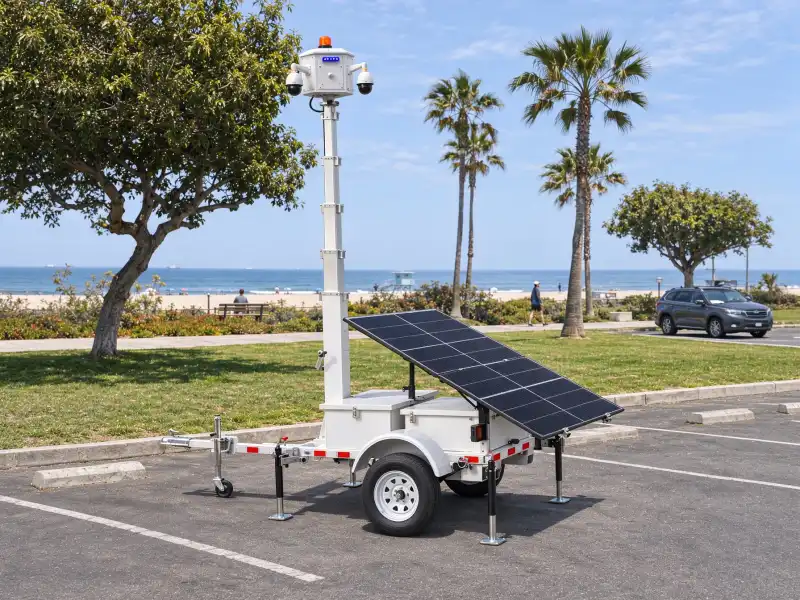
A portable message board used to be equipment only a state DOT could justify. Today it shows up on highway widening projects, at county fairs, outside mine gates, in airport curb lanes, and on rental lots. As the buyer pool widened, so did the spread in quotes. Two suppliers can price the same job and land thousands of dollars apart, because one is quoting a sign and the other is quoting a sign, a trailer, a commissioning visit, and a year of support.
A trailer-mounted portable changeable message sign usually costs between 12,000 and 20,000 US dollars. A compact truck-mounted unit can come in near 10,000, a mid-size character-matrix sign around 12,000 to 14,000, and a large full-matrix trailer unit at 14,000 to 16,000 or more. What lands on the project budget is normally higher, because installation, engineering, administration, permits, and training sit on top of the equipment line.
The gap between the sticker and the invoice is where most budget surprises come from, so it’s worth taking apart piece by piece.
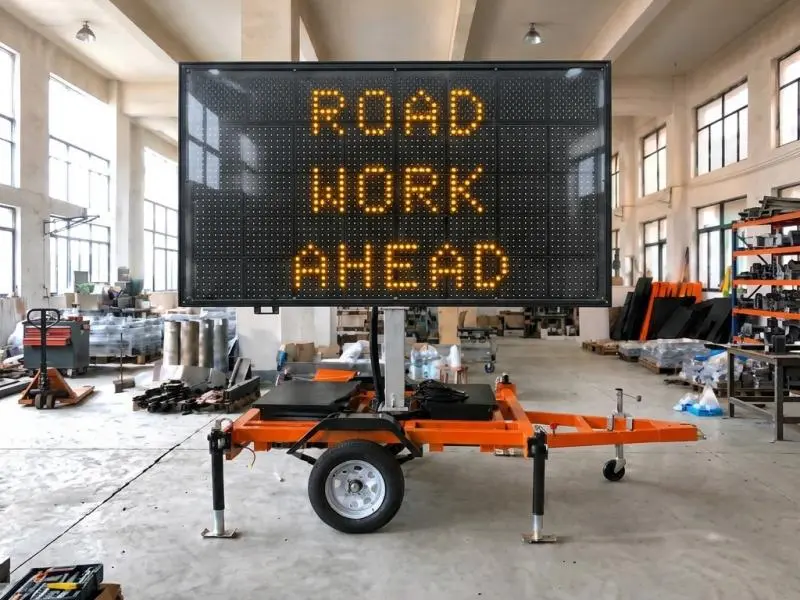
What does a portable changeable message sign cost?
Purchase prices cluster into three bands that track display size and matrix type. Small truck-mounted units sit near 10,000 dollars, mid-size character or line matrix signs run 12,000 to 14,000, and trailer-mounted line or full-matrix signs start around 14,000 and climb past 16,000 once brakes, radar, and remote control are added. Across the whole category, a realistic planning range is 12,000 to 20,000 dollars per unit.
Price bands by display type
The bands below come from published guidance for public agencies buying PCMS for work zones. They describe US purchase prices for new equipment, not rental rates.
| Configuration | Typical display size | Purchase price | Where it fits |
|---|---|---|---|
| Compact truck-mounted unit | from about 2.5 by 5 ft | around 10,000 | short jobs, incident response, utility trucks |
| Character or line matrix, mid-size | about 8 by 5 ft | 12,000 to 14,000 | single-lane closures, general work zones |
| Line or full matrix, trailer-mounted | about 10 by 6 ft | 14,000 to 16,000 and up | highway work, multi-week deployments |
| Overall range quoted for planning | varies | 12,000 to 20,000 | agency budgets and bid estimates |
Figures are drawn from the ATSSA guidance document Guidance for the Use of Portable Changeable Message Signs in Work Zones, hosted by the Vermont Agency of Transportation and reviewed on 17 November 2026.
Read the table as a starting point, not a price list. Units sourced directly from manufacturers for export often quote below these numbers, mainly because local dealer margin, domestic certification paperwork, and on-call service are removed from the deal. That trade is sometimes fine and sometimes expensive, depending on whether your project specifies an approved product list. A 14,000 dollar sign with a two-year spare parts commitment and a 14,000 dollar sign without one are not the same purchase.
For a wider view of how these platforms are configured, the range of trailer-mounted variable message signs shows how much of the price sits in the trailer, mast, and power system rather than the display itself.
What moves the number up or down
Six variables account for most of the spread between quotes:
- Display area and pixel pitch. A larger board with tighter pixel spacing needs more LED modules, more driver boards, and a heavier structure. Going from a 25 mm pitch to a 16 mm pitch on the same face can lift cost noticeably.
- Matrix type. Character matrix displays fixed text shapes. Line matrix allows any character on a line. Full matrix allows graphics, arrows, and non-Latin scripts, and it costs the most per square foot.
- Power system. Solar panels, charge controllers, and battery bank capacity are priced by watt and amp-hour. A unit sized for year-round operation in a low-sun region carries a bigger power package than one built for summer deployment.
- Trailer and mast. Brakes, lights, a DOT-style hitch, hydraulic lift, and a rotating mast all add cost. So does galvanized steel over painted steel.
- Control and telemetry. Cellular modems, GPS, web-based message scheduling, and password-protected access are small line items individually and a meaningful one together.
- Radar and sensors. A radar module that measures approaching vehicle speed and triggers a message adds hardware, calibration, and often a different controller.
Why the purchase price is not the project cost
Equipment is roughly a third of what a public agency actually spends to put one portable sign into service. In a documented San Francisco deployment, a single portable changeable message speed limit sign cost 40,200 dollars in total, of which only 12,500 was hardware. Installation labor took 7,300 and engineering plus administration took 20,400. Private buyers carry a lighter version of the same pattern: freight, permits, commissioning, and staff time all sit outside the quote.
The San Francisco numbers
The FHWA-funded PedSafe evaluation in San Francisco deployed one portable changeable message speed limit sign and four fixed signs. The portable unit’s cost breakdown, published in the ITS Deployment Evaluation database in 2015, is unusually complete.
| Line item | Cost (USD) | Share |
|---|---|---|
| Materials, supplies, equipment | 12,500 | 31% |
| Installation labor | 7,300 | 18% |
| Engineering and administration | 20,400 | 51% |
| Total | 40,200 | 100% |
The report is blunt about why the non-equipment lines were so heavy: specialized training, mobilization, and approval processes were the main cost drivers, and coordinating with local law enforcement added logistical work. None of that is unique to San Francisco. Any agency installing a sign on a live road has to plan the location, get sign-off, schedule a crew, and train someone to pull and read the data.
For a contractor, the same logic applies at smaller scale. The sign arrives on a pallet, and someone still has to insure it, tow it, store it, program it, and answer for it when a project inspector asks why the message doesn’t match the traffic control plan.
Soft costs buyers forget
- Freight, customs clearance, and import duty on an overseas order
- Permits and right-of-way approval for placement on public roads
- Mobilization: trucking the unit to site, then back to the yard
- Staff training on the controller and message software
- Storage space with power for battery maintenance
- Insurance and, in some jurisdictions, registration for the trailer
- Spare LED modules, controller boards, and a spare battery
- Data plans or software subscriptions where remote control is used
Add those up before comparing two quotes. A cheaper sign that arrives without a spare parts kit and without a commissioning visit can cost more in the first year than the difference in price.
Ten-year math
Portable signs are durable. Agencies report a typical service life of about ten years, after which parts get hard to source and repairs stop being economical. That gives you a clean way to compare purchase against rental:
Cost per deployment day = (purchase price + lifetime maintenance − resale value) ÷ total deployment days
Run the arithmetic with your own assumptions. A 14,000 dollar unit that deploys 120 days a year for ten years, with maintenance averaging 500 dollars a year, works out to 19,000 dollars spread over 1,200 days, or roughly 16 dollars a day before resale value. If your actual deployment is 20 days a year, the same sign costs about 95 dollars a day. That single calculation usually settles the buy-or-rent question faster than any argument about features.
Buy, rent, or lease?
If the sign will be on a road more than roughly 100 days a year, buying is usually cheaper over a five-year horizon. Below that, rental or an annual lease tends to win, because someone else absorbs maintenance, storage, and the capital tied up in a trailer that sits idle half the year.
| Factor | Purchase | Short-term rental | Annual lease |
|---|---|---|---|
| Upfront cash | Full price, 12,000 to 20,000 | One deposit, then day or week rate | First and last month, or a season rate |
| Cost per deployment day | Falls as days increase | Highest | Middle |
| Maintenance | Buyer | Provider | Usually provider |
| Configuration changes | Fixed once bought | Swap size between jobs | Limited swap, negotiated |
| Compliance paperwork | Buyer’s responsibility | Often provider’s, confirm in writing | Check the contract |
| Best fit | Year-round programs, fleets | Peak season, one-off events | Multi-month projects with uncertain duration |
Rental quotes arrive per day, per week, or per month, and they move with sign size, region, and season. Ask what the rate includes before you compare it to a purchase price: delivery, recovery, damage waiver, and message programming are frequently billed separately, and a rate that looks competitive can double once those are added.
Leasing sits between the two and is often the least understood option. A multi-year lease can make sense for a contractor who has three years of highway work lined up but doesn’t want to own a fleet afterward. Read the end-of-term clause. Some leases assume a purchase at residual value, others require return in near-new condition.
Matching the sign to the job
Configuration should follow deployment, not the other way around. A three-line character-matrix sign on a small trailer is right for a lane closure on a county road and wrong for an airport curb lane that needs graphics. Matching the display to the site is the single biggest lever on both price and usefulness.
Work zones and lane closures
Most work zone deployments need three lines of text, high brightness for direct sun, and a trailer that can be levelled on uneven shoulder ground. Full matrix adds the ability to show lane-shift graphics and directional arrows, which matters on multi-lane closures where a text-only message leaves drivers guessing. Trailer brakes are worth the money if the unit will sit near live traffic on a grade.
Speed limit display and radar
When a variable message sign VMS shows a speed limit alongside the measured speed of an approaching vehicle, the display has to update fast enough to be believable. That means a radar module, a controller that can handle rapid refresh, and a display bright enough to read at 300 feet in daylight. This configuration is priced above a plain text sign, and it’s usually deployed as a permanent-temporary hybrid: a portable unit placed where crash data shows a speed problem, kept for weeks, then moved.
Airports and parking
A variable message sign at an airport solves a different problem. Messages direct drivers to the right terminal, the right parking structure, or a full lot, and the sign often runs around the clock. Two requirements follow: low-brightness night modes so the display doesn’t glare into the terminal, and remote content control so messages can change without sending a crew onto the curb. Signs used in these roles are usually full matrix and often mains-powered, with solar as backup.
Where grid power isn’t available at the curb or lot entrance, a solar-powered mobile changeable message sign removes the trenching cost entirely, which is often a bigger line item than the sign.
Events and emergency response
Fairgrounds, races, and temporary venue parking reward fast setup over display sophistication. Compact vehicle-mounted units and light trailers get on site in minutes and don’t need a second vehicle. Emergency response is similar, with one addition: the unit needs to be deployable by one person in the dark, which argues for simple mast hardware and a controller that doesn’t require a laptop.
What MUTCD compliance adds to the bill
Compliance isn’t a feature you can decline. The Manual on Uniform Traffic Control Devices sets character height, brightness, contrast, message format, and abbreviation rules, and those rules decide which models a project can legally use. Signs that meet them cost more than signs that don’t, and on public work only the compliant ones get approved.
Three compliance details carry real cost:
- Message capacity. MUTCD guidance on portable signs limits how much text belongs on a screen and pushes toward short, standard abbreviations. Fewer words per line means you need more lines, or a wider display, to say anything useful. Buyers who spec a small board and then discover the message won’t fit end up buying twice.
- Pixel performance. Acceptance criteria for these signs typically require at least 90 percent of pixels in each character module to be working. Panels that fall below that threshold fail inspection, so module quality and spare parts availability become budget items, not afterthoughts.
- Approved product lists. Many state DOTs publish lists of tested and approved models for use on their projects. If your work is publicly funded, your shortlist may be limited to a handful of configurations, and those configurations rarely sit at the bottom of the price range.
A three-line configuration is the common compromise: enough capacity for a standard lane-closure message, small enough to tow behind a pickup. That’s why three-line portable changeable message signs cover so much of the market.
How to compare quotes without getting burned
Put every quote on the same specification sheet before you look at the total. Most “cheaper” quotes are cheaper because a line was removed, not because the supplier is more efficient.
Ask each supplier to confirm, in writing:
- Display dimensions, pixel pitch, and matrix type
- LED colour set and measured brightness in nits
- Solar panel wattage, battery amp-hour rating, and expected runtime without sun
- Controller type, programming method, and whether remote access is included or subscription-based
- Trailer specification: GVWR, brakes, lights, hitch type, mast lift method
- Certifications held, and whether the model appears on any state approved product list
- Warranty length, what it covers, and where spares ship from
- Delivery, commissioning, and training: included or extra
The answers usually explain the price gap in one pass. A quote missing trailer brakes, quoting a smaller battery, or excluding the modem isn’t a better deal, it’s a different product. Ask for the delta in writing and let the supplier decide whether to requote or walk.
One more habit worth building: ask what happens in year four. The sign will still be in service, the controller firmware will have moved on, and the question of whether spare LED modules are still available in the same bin code will matter more than the purchase price did.
Portable changeable message sign cost FAQ
Why do two quotes for the same sign differ by thousands of dollars?
Usually the display is the only thing that matches. One quote may include a larger battery bank, trailer brakes, a cellular modem, commissioning, and a spare parts kit; the other may be the sign alone on a pallet. Ask both suppliers for the same eight-point specification sheet and the difference becomes visible line by line.
Does a solar PCMS cost more to run than a battery-only unit?
Less, in most deployments. Solar panels and a charge controller add to the purchase price, but they cut the site visits needed to swap or recharge batteries, and site visits are the expensive part of running a portable sign. Battery-only units make sense for short jobs in shade, where solar adds weight without adding charge.
Is a used portable changeable message sign worth the saving?
Sometimes, with conditions. Used units sell at a discount, but LED modules degrade, controllers fall out of support, and trailers may need brake work. Before buying used, check pixel performance module by module against the 90 percent threshold, confirm the controller is still supported by its maker, and verify the trailer’s brakes and lights. If any of those three fails, the saving usually disappears in the first repair.