A closed lane gets announced a kilometre before the cones appear. A fog warning lights up on a gantry at two in the morning, when nobody is on shift to swap a static sign. Both are routine work for the electronic boards that sit on highway gantries, on the back of utility trucks and on trailers parked beside roadworks. Most buyers meet them long before they understand them. The board looks simple, the quote is not, and the specification sheet is full of terms that decide whether a driver can actually read the message at highway speed.
A variable message sign (VMS) is an LED display driven by a controller that builds messages from live data instead of fixed paint. Sensors, cameras and traffic operators feed information into the control system, the controller assembles that information into a pre-approved message frame, and the LED matrix renders the characters and symbols. The sign then keeps refreshing as conditions change. That is the whole difference: a static sign states a permanent rule, a variable one states what is happening right now.
What matters for anyone specifying or buying one is what sits behind the display and how each part is chosen.
What a variable message sign is
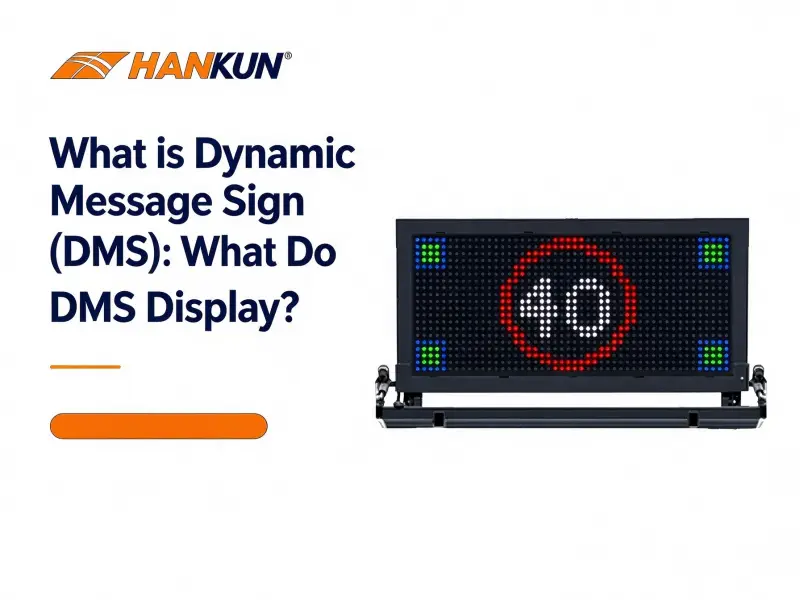
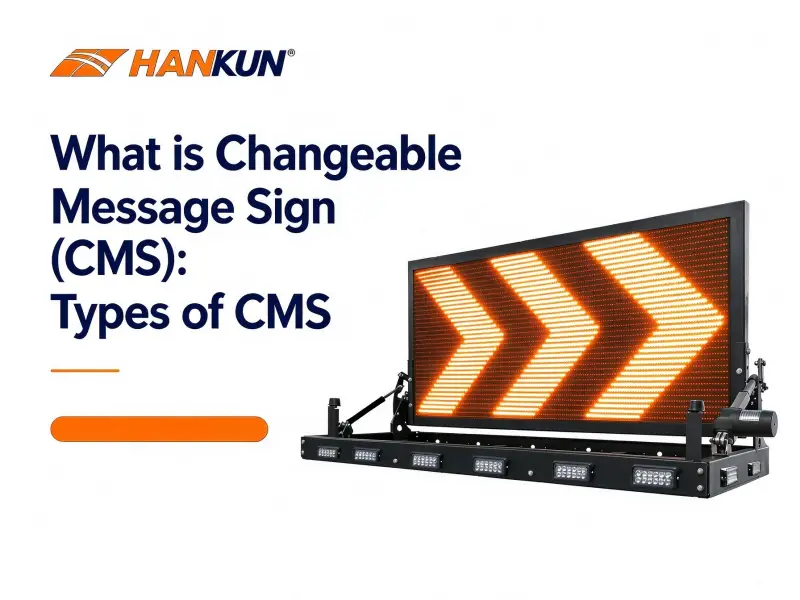
A variable message sign board is a roadside or vehicle-mounted electronic display whose content can be changed from a controller, either on site or over a network. The industry uses three names for the same object: VMS, PCMS in US temporary traffic control, and DMS in parts of the ITS literature. All three describe a matrix of LEDs behind a protective face, driven by a controller that stores and displays approved messages.
The naming split is worth knowing before a tender. In the United States, the Manual on Uniform Traffic Control Devices treats portable changeable message signs as temporary traffic control devices, so procurement documents tend to say PCMS. European and Australian standards work with the broader VMS term, and intelligent transportation system projects usually say dynamic message sign. A supplier quoting a “PCMS” and a supplier quoting a VMS trailer are describing the same class of equipment, and the Variable Message Signs category covers both formats.
Under the face, the parts are consistent across formats.
| Part | What it does |
|---|---|
| Display face | Rows of LED modules mounted on a front-access panel, behind a UV-stable protective face |
| Controller | Stores message libraries, checks each message against configured limits, drives the display |
| Power system | Solar array, charge controller and battery bank, often with an AC input for shore power |
| Communications | Cellular modem, Wi-Fi access point and a serial or Ethernet link for a traffic management centre |
| Cabinet and frame | Sealed enclosure with thermostatic control, mounted on a gantry, a mast or a trailer chassis |
| Mounting | Fixed gantry, hydraulic mast, truck bed or towable trailer with stabiliser legs |
How a variable message sign works, step by step
Every VMS runs the same four-stage loop: gather data, decide what the driver needs to know, build a legal message, and confirm the display matches the instruction. The loop can run on a schedule, on an operator’s command, or automatically when a sensor crosses a threshold.
- Data arrives. Loop detectors, radar, cameras, weather stations and incident reports feed the traffic management centre, or a local controller on a stand-alone unit.
- Logic decides. The system compares the input against rules. A speed drop over a set threshold may pull a queue warning; a lane closure event pulls the merge message instead.
- The message is built. The controller assembles the frame from an approved library, checking line count, character count and display duration before anything reaches the panel.
- The panel updates and reports back. The display refreshes within seconds, and the controller returns status: which modules are alive, what the battery voltage is, whether the last command executed.
The message generator, explained
A variable message sign generator is the software layer that turns an intention into a frame the panel can render. On a small portable board it may be a keypad menu with a few dozen presets. On a networked fleet it is a web platform where a dispatcher types or selects a message, previews it against the actual pixel grid, and schedules it.
The generator does three jobs that are easy to underestimate. It constrains the message to what the sign can physically show, which is usually three lines of eight characters on a portable unit and considerably more on a gantry sign. It applies the approved abbreviations and pictograms, because a message that runs out of characters halfway through is worse than no message. And it handles timing, since phases have to stay visible long enough for a driver to read them at approach speed and then clear before the next phase.
On standards-based networks, the message format and the way it is transmitted are defined by NTCIP, the protocol family published since 1996 for US intelligent transportation systems. A sign that speaks NTCIP can be driven from a central platform alongside equipment from other suppliers. A sign that does not will need its own app and its own dispatcher.
What happens when the link drops
A cellular link fails more often than buyers expect, particularly on remote work zones. Well-built units keep the last message on screen, hold a library of scheduled messages locally, and retry the connection. Some fall back to a fail-safe display such as a blank screen or a fixed “message not available” frame, which is better than showing a stale lane closure for six hours.
What is inside the display
The display is a grid of LEDs grouped into replaceable modules, and three numbers decide how well it reads at speed: pixel pitch, character height and luminance. Get those wrong and the sign is compliant on paper and unreadable on the road.
Pixel pitch is the centre-to-centre distance between LEDs. A smaller pitch packs more detail into the same area, which suits symbols and short viewing distances. A larger pitch produces coarser characters but more light per pixel, which suits long approach distances. The right pitch follows from the viewing distance and the required character height, never from a preference for sharper images.
Character height is the number regulators care about. Trailer and truck-mounted units in the US are normally specified with 18-inch characters, the figure long associated with MUTCD legibility requirements for portable signs. A board can meet that height on paper and still fail on the road if the pixel count per character is too low to render a clean stroke.
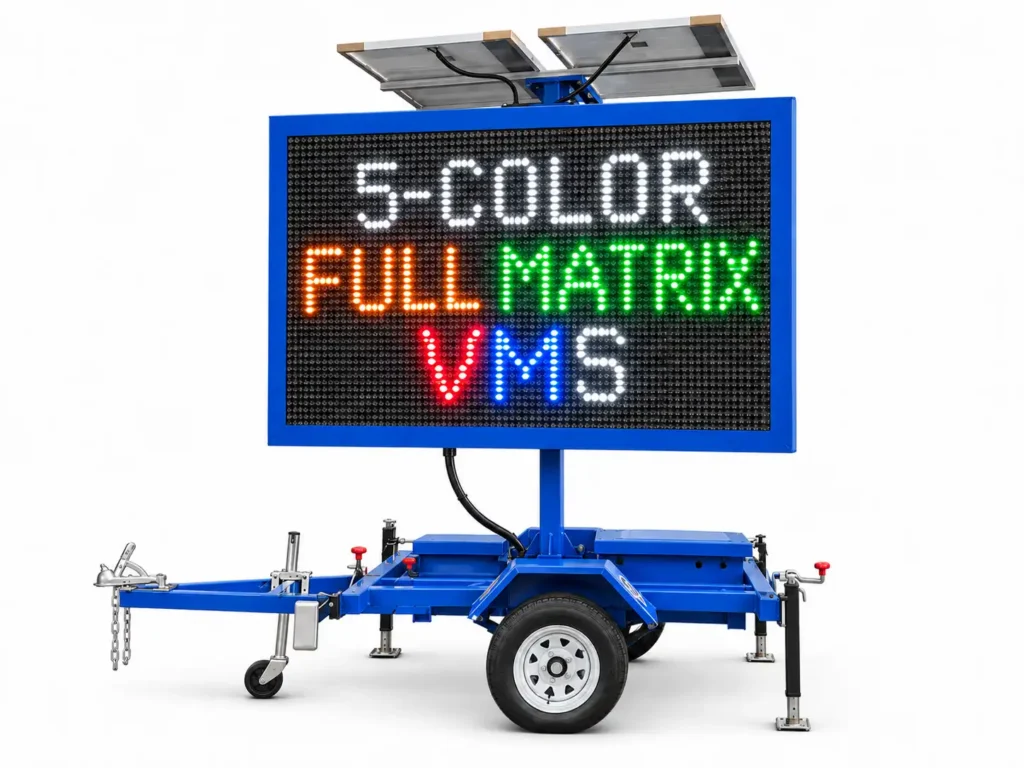
Luminance and colour come next. Amber is the workhorse for work zones, because it contrasts against almost any background and matches the regulatory expectation for temporary traffic control. Five-colour displays add enough palette for speed limit discs and give-way symbols. Full-colour RGB panels serve events and advertising, and they are a poor fit for a highway work zone where brightness discipline matters more than image quality.
Two quieter specifications separate a good unit from a cheap one. Automatic dimming, which drops output at night instead of blinding drivers, and the IP rating on the LED modules themselves, not just the outer cabinet. A sealed cabinet with unsealed modules still takes water.
The main types of variable message sign
Portable and permanent units share the same electronics but not the same constraints. A gantry sign answers to structural load and grid power. A portable unit answers to towing weight, battery capacity and how fast a crew can move it to the next job.
Full-matrix and character-matrix boards
A character-matrix board reserves fixed positions for fixed character shapes. It is cheap, bright and limited: three lines of eight characters, no graphics. A full-matrix board treats the whole face as one addressable grid, which allows variable font sizes, arrows, lane diagrams and symbols from the standard pictogram set. Almost every modern specification calls for full matrix, because lane closure schematics and merge arrows simply cannot be drawn on a character board.
Trailer-mounted units
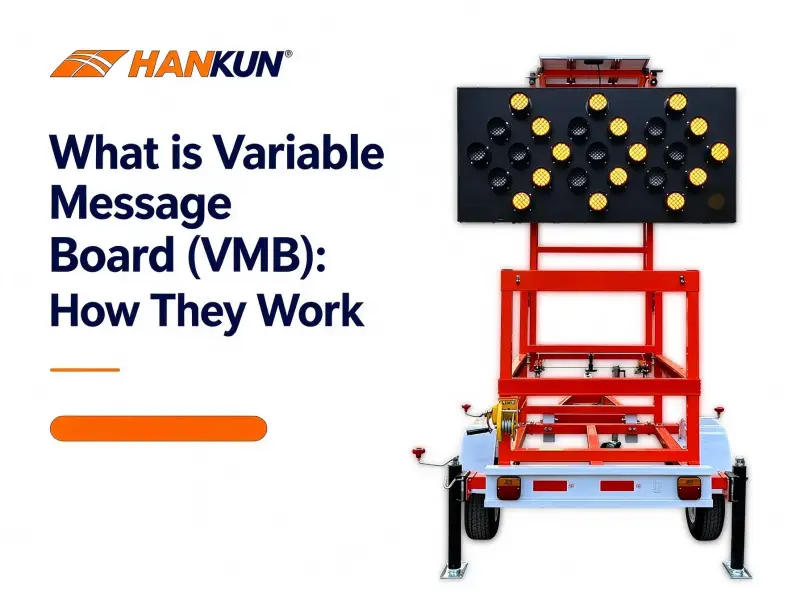
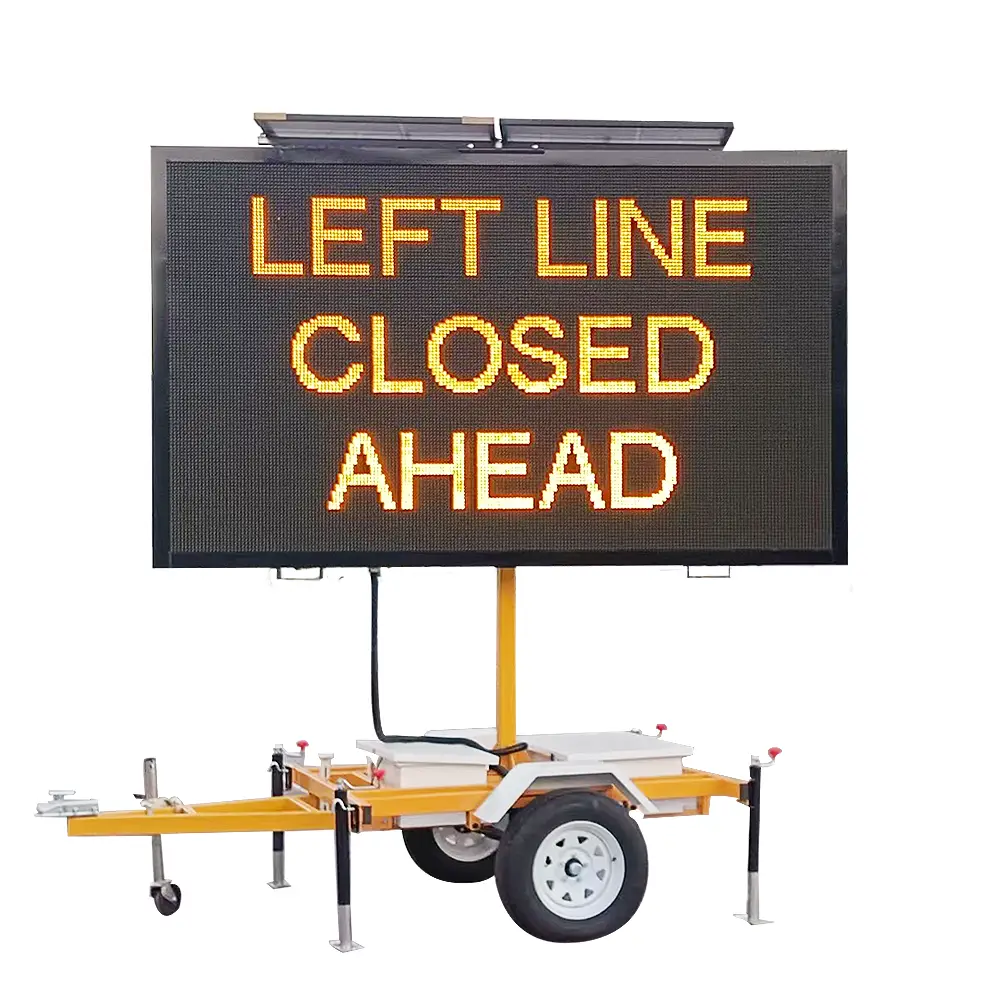
Trailer-Mounted Variable Message Signs are the standard answer for roadworks that last weeks rather than hours. They carry their own solar array and battery bank, lift the panel on a manual or hydraulic mast, and tow behind a standard vehicle. The trade-off is weight and setup time: a large trailer unit needs a suitable towing vehicle and a stable, level position before the mast goes up.
Vehicle- and truck-mounted boards
Vehicle-mounted boards mount on a truck bed, a flatbed or a roof rack, and they exist for mobility rather than endurance. A supervisor can reposition one in minutes, which suits short-duration works, incident response and moving operations. The panel is smaller and the battery is smaller, so output and autonomy are lower than a trailer unit. On a utility fleet, these boards often do double duty as arrow boards and message panels.
Permanent gantry signs
Gantry signs sit above the carriageway on a structural frame and draw grid power. They carry the largest panels, the highest message capacity and the deepest integration with a traffic management centre. They are also the least flexible: a gantry sign is installed for a decade, so the specification has to anticipate message types and standards the agency has not adopted yet.
Where VMS fits among the four types of traffic signs
Driving manuals usually divide signs into four groups: regulatory, warning, guide and service. The question of what the four types of signs are comes up often enough that buyers ask where an electronic board belongs. The answer is that a VMS is not a fourth category or a fifth one. It is a delivery format that can carry any of them.
The same panel shows a speed restriction, which is regulatory, a lane closure warning, which is warning, and a distance and route instruction, which is guide. That flexibility is exactly why the FHWA manual on uniform traffic control devices governs message content, character height and display duration rather than just the hardware. The device is regulated as a sign, not as a screen.
Power and connectivity on sites without a grid
Most portable signs run off a solar array and a battery bank, and the design question is not whether solar works but how many consecutive dark days the site has to survive. Autonomy, not panel wattage, is the number to specify.
A solar array sized for average irradiance will fail in a week of heavy cloud, so the battery bank carries the margin. Sealed gel batteries remain common because they tolerate deep discharge and need no maintenance. Lithium packs are lighter for the same capacity, which matters on a trailer, but they cost more and need thermal management in extreme heat.
Dual charging is worth insisting on. An AC input covers tunnel work, covered staging areas and winter weeks when solar input collapses. A charge controller that reports state of health over the network turns a maintenance guess into a scheduled visit.
Connectivity splits three ways. An on-board controller needs someone physically at the unit. A Wi-Fi access point covers on-site programming. A cellular link with a web platform is what makes a fleet manageable, because one dispatcher can update twenty units without dispatching a technician to each one.
What variable message signs cost
Variable message signs cost is set by screen area, pixel pitch, colour capability, mast type, battery capacity and certification. Two boards that look identical in a product photo can differ by a factor of five once the specifications are opened up.
Four items move the number most.
| Cost driver | Effect on price |
|---|---|
| Screen area and pitch | Larger panels and finer pitch add LED modules, drivers and power draw |
| Colour | Amber is the baseline; five-colour and full-colour RGB add cost and complexity |
| Mast and chassis | Manual lift, hydraulic lift and heavy-duty trailer frames sit at very different price points |
| Autonomy and certification | Bigger battery banks, dual charging and third-party testing all add cost |
A unit like the Solar-Powered Mobile Changeable Message Sign sits at the upper end of the range, because the panel, the mast and the battery bank all scale together on a trailer build. Public marketplace listings checked on 27 October 2026 put trailer-mounted units anywhere from roughly $2,000 for a small single-colour board to more than $20,000 for a large full-colour unit with a hydraulic mast. Those are listing prices between trading platforms, not quotations, and they exclude freight, duties, commissioning and any certification the buyer’s road authority demands. Treat them as a shape, not a budget.
A usable quotation needs five things from the buyer: the required character height, the typical viewing distance, the number of message lines, the daily and annual hours of operation, and the standard the sign must be certified against. Without those, a supplier can only quote a generic unit and hope it fits.
What to check before you specify one
The specification that gets a sign rejected is rarely the display. It is the certification, the autonomy claim or the control protocol that turns out to be missing after delivery. Check those before the price, not after.
If the deployment is a work zone rather than an event site, start with a guide to choosing an Amber VMS for Traffic Management Projects, then come back to the table below.
| Check | Why it matters |
|---|---|
| Character height and pixel pitch | Determines legibility at the approach speed the site actually has |
| Luminance class and dimming | Night glare and midday washout are both compliance issues |
| IP rating on modules and cabinet | Water ingress at module level is the most common field failure |
| Battery autonomy in dark days | Solar-only claims that assume clear weather fail in winter |
| Control protocol and platform | A sign that cannot join the network becomes a manual asset |
| Certification for the destination market | EN 12966 in Europe, MUTCD and NTCIP practice in the US, local variants elsewhere |
Maintenance and uptime
LED modules fail a pixel at a time, and a few dead pixels degrade a character stroke before the sign stops working. Field-replaceable modules with quick connectors turn that into a ten-minute job. Cabinets that require a whole-panel swap do not.
Published LED ratings for traffic displays typically sit near 100,000 hours at full output, which is a component figure rather than a service life. In practice the battery bank, the charge controller and the cabinet seals decide when a portable unit needs attention, long before the LEDs do. A maintenance schedule built around those three items costs less than reacting to failures.
FAQ
How long does a variable message sign last?
The display itself usually outlives its first battery bank by several years. Expect module-level service on a multi-year cycle, battery replacement on a shorter one, and cabinet seal inspection every year on units that stay outdoors.
Can a solar VMS run through a week of rain?
Only if the battery bank was sized for it. Autonomy is a specification, not a feature, so ask for the figure in dark days at the site’s latitude and check whether the quoted number assumes any solar input at all.
Do these signs display non-Latin characters?
Full-matrix panels can render most character sets, but the message generator has to support the font and the road authority has to approve the message format. On character-matrix boards the font is fixed at the factory, which rules out anything beyond the standard Latin set.